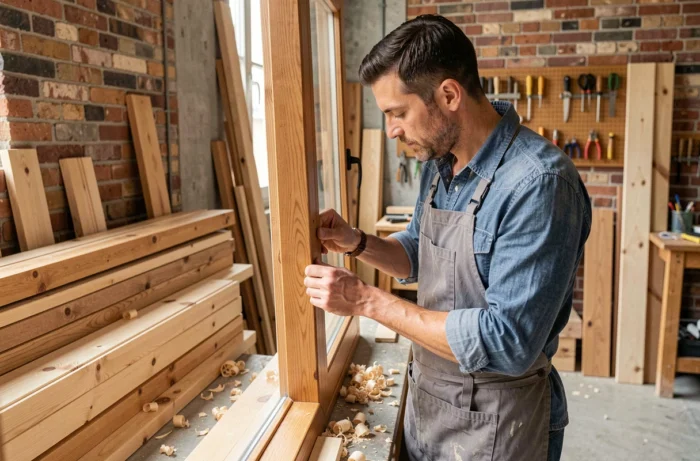
Custom carpentry represents a significantly rising expense since the beginning of 2026. This pressure on costs (raw materials, skilled labor) is redefining the choices of individuals considering interior or exterior renovation work.
The choice of a custom solution is no longer just a matter of aesthetics: it involves technical decisions related to thermal regulations, available materials, and the durability of the works.
Thermal bridges and RE2020: what the regulations impose on exterior carpentry
The RE2020, which replaced the RT2012, was tightened in 2025. The construction Ic threshold (carbon footprint of materials) was reduced by about 15% compared to the thresholds of 2022. For exterior carpentry, this translates into a heightened requirement for the treatment of thermal bridges at the wall-carpentry junctions.
Custom windows and doors allow for precise adaptation of insulation reveals and installation methods (surface-mounted, tunnel, rebate) to the actual configuration of the building. A standard carpentry piece, designed for standardized dimensions, often leaves a gap filled with expanding foam, which degrades the actual thermal performance.
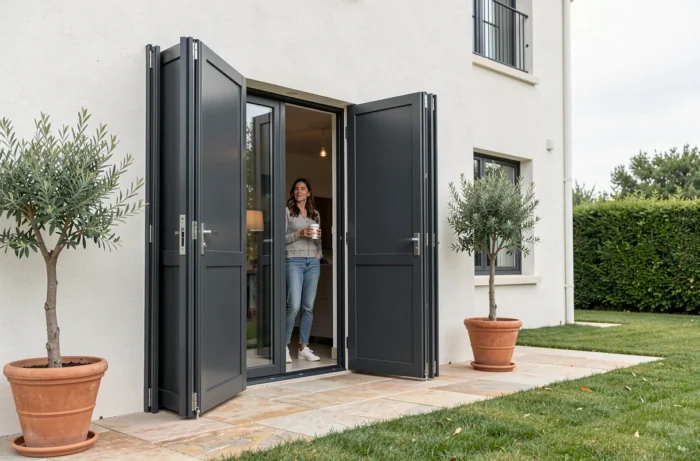
Low-carbon materials are directly favored by this regulatory tightening. Wood, wood-aluminum composites, and aluminum with recycled content have a significantly lower carbon footprint compared to standard PVC or virgin aluminum. A custom exterior carpentry project designed from the outset with these constraints avoids the costs of compliance retroactively. Craftsmen like Menuiserie Airaines address these issues of manufacturing adapted to current thermal requirements.
Custom interior carpentry: where standard reaches its limits
Atypical architectural configurations (sloped ceilings, non-square walls, variable ceiling heights) render industrial solutions unusable without cutting or adaptation. Custom carpentry makes perfect sense in these situations, but not exclusively.
An integrated dressing room, a bathroom layout, or a built-in library require design skills that go beyond simple cutting. Taking precise measurements, choosing hardware suitable for the weight of the openings, selecting wood species compatible with the room’s humidity: every technical decision affects the longevity of the furniture.
- In the bathroom, moisture-resistant wood species (treated oak, teak, densified bamboo) should be prioritized for vanity units and storage columns.
- In an attic space, custom manufacturing allows for the utilization of lost volumes with trapezoidal boxes that no catalog offers.
- For interior doors, a custom opening corrects common plumb defects in old houses, where a standard door may rub or leave an uneven gap.
Custom solutions are not justified everywhere. For a room with standard dimensions and square walls, a well-chosen series piece fulfills the same function at a lower cost. The investment in custom solutions pays off when the architectural constraint is real or when the project aims at enhancing the property’s value.
Materials and manufacturing: the concrete trade-offs of a custom project
The choice of material structures the entire project. Solid wood remains the reference for high-end interior carpentry, but its cost and sensitivity to humidity variations impose precautions. Lacquered medium-density fiberboard (MDF) offers a more dimensionally stable alternative for closets and dressing rooms, with a refined visual finish.
For exterior carpentry, the wood-aluminum composite combines thermal insulation and weather resistance. The wood on the interior side provides warmth and insulating performance, while the aluminum on the exterior side eliminates the regular maintenance (painting, staining) that wood alone requires.
Artisanal or semi-industrial manufacturing
The distinction between an artisanal workshop and a semi-industrial manufacturer does not concern the final quality, but the process. An artisan carpenter works piece by piece, with maximum adaptability to unforeseen site conditions. A semi-industrial manufacturer uses CNC machines that ensure perfect repeatability of measurements, but with less flexibility for last-minute adjustments.
The NF Windows certification, managed by the FCBA, serves as a reliable benchmark for exterior carpentry. It certifies standardized tests on air and water tightness and wind resistance. For interior carpentry, no equivalent certification exists: verification is done on samples, client references, and workshop visits.
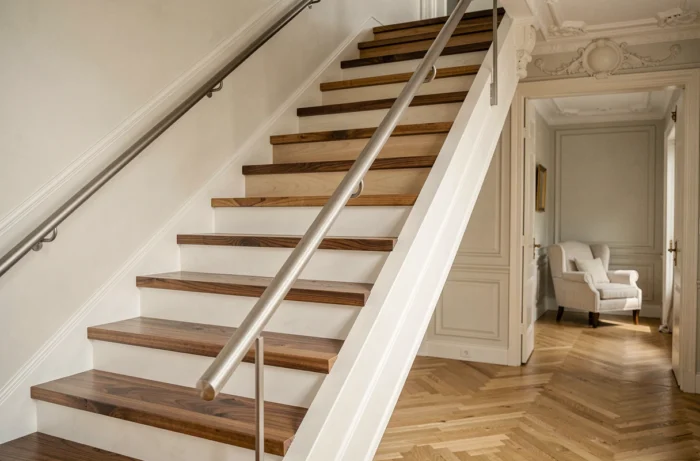
Custom carpentry budget: securing your project in a tense market
The price increase observed in 2026 (+1.6% in the first quarter and then +1.6% in the second quarter for carpentry work) makes budget management more delicate. Several levers can help limit unpleasant surprises.
- Have a precise measurement taken before any order: discrepancies between the initial measurements and the reality of the site are the primary source of additional costs.
- Compare at least three detailed quotes distinguishing supply and installation, to identify the areas where price differences are most significant.
- Anticipate manufacturing times, which vary greatly depending on the workload of the workshops and the availability of the chosen materials or profiles.
- Check warranty conditions on hardware (hinges, slides, locks), often the first element to wear out.
Field feedback varies on the opportunity to consolidate all carpentry items (windows, doors, fittings) with a single provider. Some craftsmen excel in interior carpentry but subcontract windows, which dilutes responsibility in case of defects. Clarifying the exact scope of the carpenter’s own manufacturing before signing remains the best precaution.
The custom carpentry market in 2026 finds itself at the crossroads of strengthened regulatory constraints and rising production costs. Choosing custom solutions for an interior or exterior project remains relevant when the technical constraint justifies it, provided that measurements, material choices, and budget are locked in before manufacturing begins.