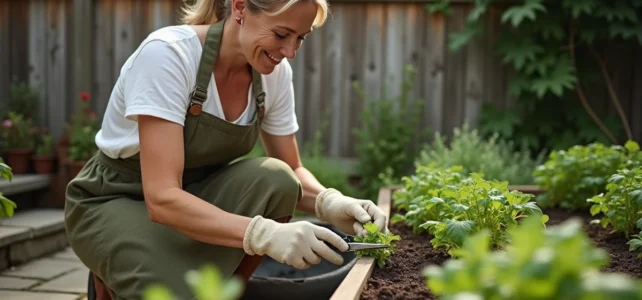
Maintaining a garden all year round without dedicating every weekend to it requires measuring where time and water actually go. With watering restrictions multiplying since 2022 and increasingly frequent heatwaves, garden maintenance methods are evolving rapidly. Which actions yield visible results with the least effort, and which ones consume resources for marginal benefits?
Time spent and water consumed: comparing garden maintenance tasks
Most articles list tips without prioritizing their real impact. A table allows you to visualize where to focus your efforts based on two simple criteria: average weekly time and associated water consumption.
Related reading : Tips and Trends for Successfully Managing Your Real Estate Projects with Peace of Mind
| Maintenance Task | Typical Frequency (peak season) | Estimated Time per Intervention | Water Consumption |
|---|---|---|---|
| Lawn Mowing | Weekly | Medium to high | None |
| Manual Watering | Daily in summer | Low per session, high cumulatively | Very high |
| Drip Irrigation with Sensor | Automated | Almost none after installation | Low to moderate |
| Manual Weeding | Biweekly | High | None |
| Mulching (installation) | Seasonal (2 to 3 times/year) | Medium at installation, none afterwards | Reduces evaporation |
| Pruning Hedges and Shrubs | 2 to 4 times/year | High | None |
The contrast between manual watering and automated drip irrigation illustrates a significant cumulative time difference over a season. Conversely, pruning remains an unavoidable task that automation does not resolve.
To delve deeper into each task based on your soil type and vegetation, you will find practical advice on Conseil au Jardin that details the appropriate actions for each configuration.
You may also like : Gentlemen: Tips and Advice for Perfectly Maintaining Your Trendy Mullet Cut
Mulching and Soil Covering: the lever that reduces several tasks at once
Mulching simultaneously impacts three lines of the table above. It slows the growth of weeds (less weeding), limits evaporation (less watering), and protects roots from temperature fluctuations.
Where bare soil requires regular weeding and daily watering in hot periods, an organic mulch of a few centimeters cuts summer interventions by half or more. The materials vary according to the season and area of the garden:
- Chipped branches or bark for flower beds and tree bases, with slow decomposition that enriches the soil over several months
- Straw or hay for the vegetable garden, easy to move between crops and beneficial for microbial life
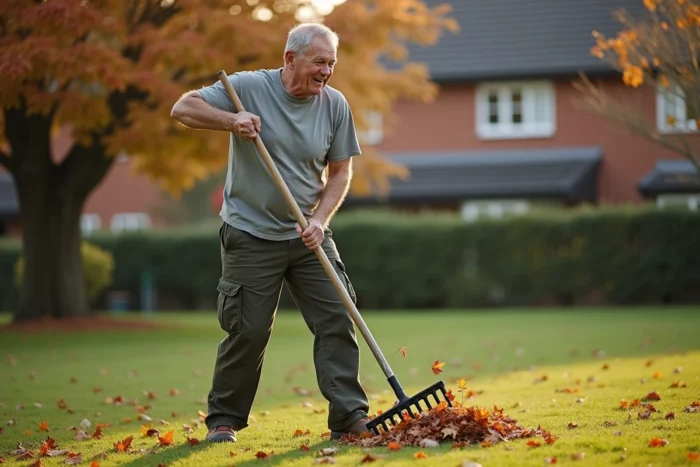
- Dead leaves collected in autumn, free and suitable for flower beds, provided they are coarsely shredded to prevent them from forming an impermeable crust
The timing of installation is as important as the material. Mulching on already dry soil isolates the dryness: it is better to apply mulch after rain or thorough watering when the soil is still moist.
Mowing Height and Lawn Management in Dry Periods
Landscapers now recommend never mowing below about 5 cm in summer to protect the grass from heatwaves. A taller blade of grass shades the soil, reduces evaporation, and develops a deeper root system.
This practice reverses the logic of closely cropped grass that has dominated for decades. However, it requires adjusting the mowing rhythm: in spring, when growth is strong, weekly cutting remains necessary. In summer, spacing mowings to every ten or fifteen days is often sufficient, provided the blade is raised.
Leaving mowing residues in place (mulching) adds a natural mulching effect. Cut grass decomposes in a few days and returns nitrogen to the soil, which reduces the need for fertilizers. Two conditions for this to work: the lawn must be dry at the time of mowing, and the amount cut should not form thick clumps that would suffocate the grass underneath.
Automated Watering with Moisture Sensor: What It Changes Practically
Since 2024-2025, requests for the installation of drip systems coupled with moisture sensors have significantly increased among gardening professionals. The reasons are twofold: drought orders limit the allowed watering slots, and water is becoming an increasing expense.
A moisture sensor planted in the soil measures the amount of water available to the roots. The system only waters when the soil drops below a defined threshold, eliminating unnecessary watering after rain or during overcast weather. The gain is not limited to water: it mainly frees up time on a daily basis.
The installation requires an initial investment (pipes, timer, sensors), but the system is modular. You can start with a priority area, such as the vegetable garden or the most exposed flower beds, and then gradually expand the network.
- Vegetable Garden: drip irrigation at the base of each plant avoids wetting the foliage, which reduces fungal diseases
- Shrub Beds: a separate circuit with a lower flow is sufficient, as established shrubs have lower needs
- Lawn: drip irrigation is not suitable, but programmed sprinkler watering early in the morning (before 8 a.m.) limits evaporation
Seasonal Calendar: Spreading Tasks to Avoid Accumulation
The most common mistake is concentrating maintenance in spring, when everything grows at once, and then facing delays for the rest of the year. Spreading a few key actions by season reduces the burden of each intervention.
In autumn, collect and shred dead leaves to create a stock of mulch. Prune fast-growing hedges one last time before the plants go dormant. Clean tools and drain watering systems before frost.
In winter, the garden requires few direct interventions. It’s the time to plan spring plantings and check the condition of the equipment. A dull pruner or a leaky hose discovered in March can waste a disproportionate amount of time.
In spring, apply mulch as soon as the soil warms up and the last frosts have passed. Install or reactivate the watering system. In summer, a well-prepared garden almost runs itself: spaced mowing, automated drip irrigation, and mulching cover most needs.
A garden that requires less time is not a neglected garden. It is a garden where choices about soil covering, mowing height, and watering methods have been made in advance, so that each intervention produces a lasting effect rather than a constant catch-up.