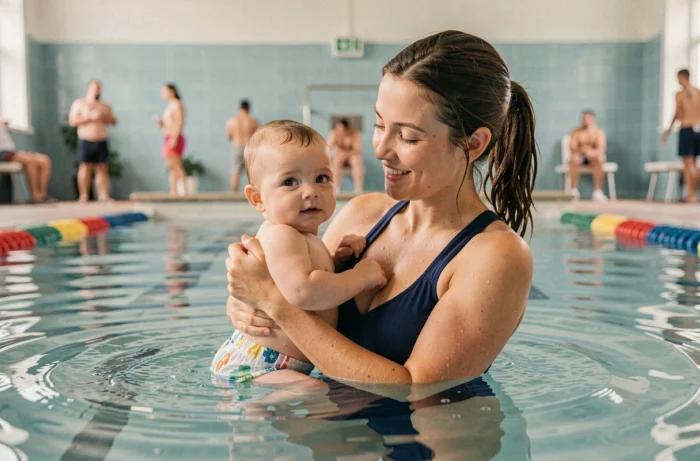
Your baby is splashing around in the bath, slapping the water with their hands and seems perfectly at ease. You wonder if a baby swimming session in Poitiers could extend this enjoyment in a suitable setting. Feedback from parents who have taken the plunge helps to clarify things, much more than a simple activity description.
How the pool temperature affects an infant
One detail comes up in almost all parent testimonials: the warmth of the water. At the Blaiserie pool, where Stade Poitevin Natation organizes its sessions, the water is heated to between 31 and 32 °C. This range is not trivial.
An infant struggles to regulate their body temperature. Below 30 °C, a baby under one year can cool down in just a few minutes and become irritable, even refusing to return for the next session. Parents who have tried cooler pools regularly report this.
Conversely, water that is too hot (above 34 °C) quickly tires the little one. The 31-32 °C range allows for thirty-minute sessions without the baby showing signs of discomfort. This is a criterion to check before choosing a facility, as not all pools in the region heat their water to this level.
The reviews from parents in Poitiers confirm that this temperature issue often determines the success of the first sessions.
Baby swimming sessions in Poitiers: what parents notice after a few weeks
The first swim in a public pool impresses both the parent and the child. The noise echoes, the space is larger than the bathtub, and other families share the pool. Have you noticed that your baby observes other children a lot? This is precisely what happens during the first sessions.
Physical ease progresses quickly
After three or four sessions, parents describe a clear change. The baby accepts being on their back, relaxes their shoulders, and starts kicking their legs voluntarily. Comfort in the water generally sets in before the fifth session, provided a weekly rhythm is maintained.
This gain in motor skills does not stay in the pool. Several families report that their child also shows more confidence on the ground, especially during rolling and crawling phases.
The parent-child bond in an unusual context
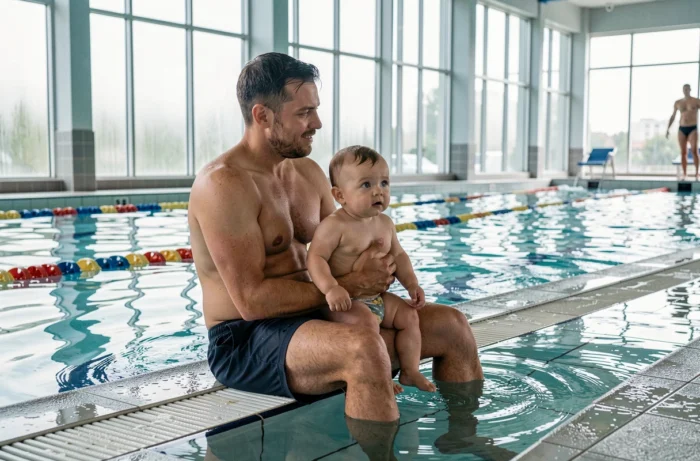
The sessions take place in pairs. The parent holds the baby, guides them, reassures them. This skin-to-skin contact in the water strengthens mutual trust. For a father who works during the week, the Saturday morning slot at the Blaiserie sometimes becomes the highlight of the week with their child.
Feedback also highlights an unexpected effect: the parents themselves relax. The warm water, playful setting, and absence of phones in the pool create a rare pause in a busy daily life.
Supervision and safety: what has changed recently
Safety remains the main concern for hesitant parents. Why does this topic come up so often? Because entrusting a five-month-old baby to an aquatic environment requires solid guarantees.
Since the decree of March 24, 2026, structures organizing swimming for minors in a collective setting must meet new requirements. Supervisors must be adults, permanent members of the teaching team, and listed on a specific qualifications list. This strengthening mainly affects associations and leisure centers that offer baby swimming slots in addition to municipal pools.
In practical terms, this means that a serious facility in Poitiers should be able to inform you about:
- The number of supervisors present in the pool compared to the number of babies registered for the session
- The specific qualifications of each instructor (lifeguard certificate, state diploma, or equivalent qualification listed on the regulatory list)
- The protocol applied in case of an incident, including the presence of first aid equipment in immediate proximity to the pool
If the facility hesitates to answer these questions, it’s a warning sign. Well-established clubs like Stade Poitevin Natation provide this information without difficulty.
Choosing the right session and facility in Poitiers
Poitiers offers several options, from community clubs to peripheral aquatic centers. The choice is not limited to geographical proximity.
The minimum age and duration of sessions
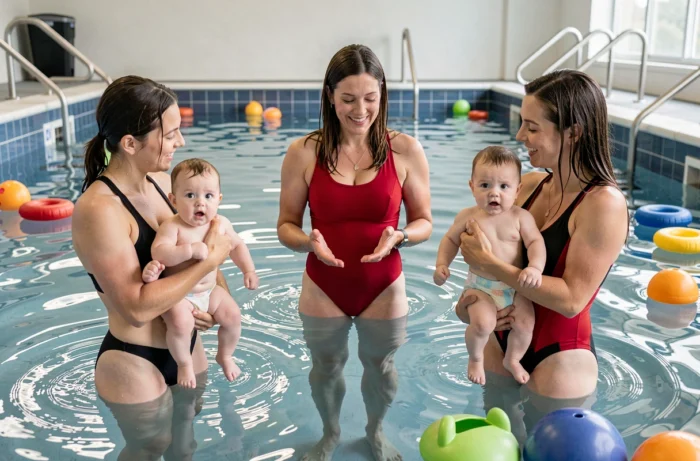
At Stade Poitevin Natation, babies are welcomed from five months up to three years. Sessions last thirty minutes, a format suited to an infant’s attention span and physical endurance. Beyond thirty minutes, fatigue takes over and the experience becomes counterproductive.
A weekly rhythm makes a difference
Parents who space out sessions too much (one every two or three weeks) find that their baby starts almost from scratch each time. One session per week remains the minimum rhythm to observe progress. Saturday morning slots, available from September to the end of June, allow for this regularity without disrupting family organization.
What to prepare for the big day
- A swim diaper suitable for the baby’s size (mandatory in most pools)
- A swim cap for the parent, often required by the pool’s internal regulations
- A thick towel or baby bathrobe for after leaving the pool, as cooling down is quick
- A bottle or snack for after the session, as activity in the water increases appetite
Prices vary by facility. At Stade Poitevin Natation, the cost covers a full season, which amounts to an annual commitment. Other facilities offer packages by the term or à la carte. Comparing formats before committing avoids unpleasant surprises.
Families who have tried several facilities in Poitiers and the surrounding area often return to one point: the quality of the welcome matters as much as the facilities. A smiling instructor who takes the time to explain each exercise reassures the parent, and by extension, the baby. Ultimately, it’s this human factor that makes the difference between an activity that is abandoned after a month and a weekly appointment that is eagerly anticipated every Saturday.