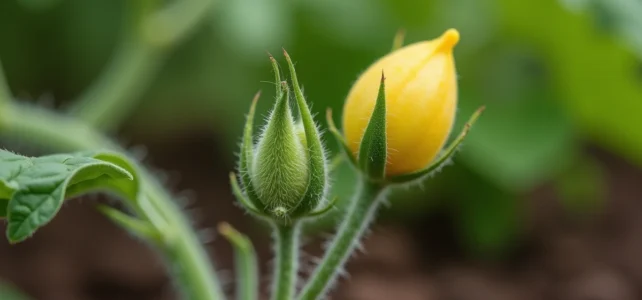
We sowed our tomatoes in March, transplanted in May, and by early July, we are still fixing yellow flower clusters with not a single colored fruit in sight. This gap between the effort put in and the visible results in the vegetable garden is bewildering every year, especially when growing your first varieties. The time it takes to see your tomatoes appear depends on several successive stages, each with its own requirements.
Thermal blockage of tomato flowers: the trap of hot summers
Before discussing the calendar, one point that most guides gloss over: excessive heat can completely halt fruiting. When temperatures stay above 32 °C (about 90 °F) for several days, the flowers drop before forming a fruit. You end up with a vigorous plant covered in flowers, but with no fruit set.
See also : How to Write "See You Later" Correctly: Tips and Spelling Explanations
This phenomenon explains why the theoretical timeline “from bud to harvest” can sometimes extend by two to three weeks in the height of summer. If you notice repeated flower drop, the only thing to do is protect the plants (light shading cloth, thick mulch at the base) and wait for the nights to become cooler again.
To understand in detail the transformation of the flower into fruit, the gardening article on Wiki for Home precisely describes the mechanisms of pollination and fruit set.
Related reading : How to View Print History on Mac and Manage Your Printed Files
Duration of each growth stage of tomato plants
The complete cycle can be divided into four phases. Each has its own duration, and it is their addition that gives the total time from sowing to harvest.
Germination and seedlings
Germination generally takes 5 to 10 days depending on soil temperature and moisture. The emerging seedlings are fragile and need abundant light. This growth phase of the young plants lasts about 2 to 3 weeks, until the first true leaves appear.
Vegetative development before flowering
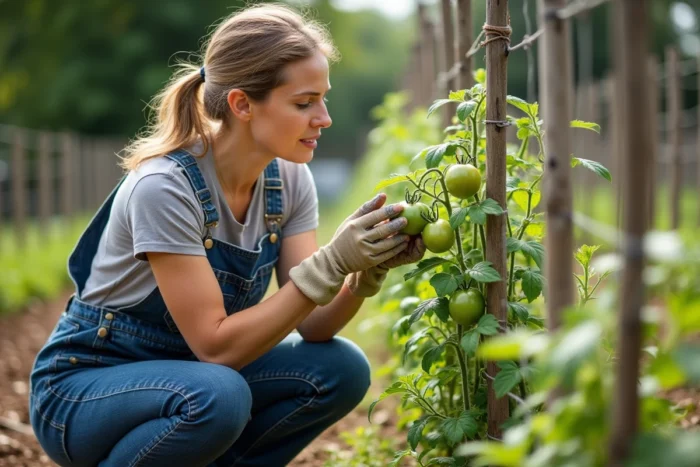
The development of the plants lasts about 4 to 6 weeks after the seedling stage. This is the period when the foliage thickens, the stem thickens, and the roots colonize the soil. As long as this phase is not completed, flowering is delayed.
Flowering and fruit formation
Once the first yellow flowers open, fruit set (the transformation of the flower into a small green fruit) occurs within a few days if pollination is effective. The fruits then grow for several weeks before reaching their final size.
Maturation on the plant
The maturation of tomatoes, from green fruit to colored fruit, represents the final stretch. The total duration from sowing to harvest varies by variety: cherry tomatoes and early varieties produce faster than large varieties like beefsteak, which require a significantly longer cycle.
- Early varieties (cherries, small calibers): the first harvests arrive earliest in the season, often by mid-July for a March sowing.
- Mid-season varieties (Roma, classic reds): expect a few additional weeks compared to early varieties.
- Late varieties (beefsteak, large fleshy): harvest may not begin until August or even September, depending on the region and weather.
Harvesting at the right stage: the “breaker” reference that few gardeners use
It is often expected that the tomato is fully red before picking. This is a common mistake that wastes time and exposes the fruits to pests, sunburn, or splitting.
As soon as 30 to 50% of the fruit’s surface has changed color, we reach what is called the “breaker” stage. At this point, the tomato is already producing its own ethylene and will continue to ripen on its own, even when detached from the plant.
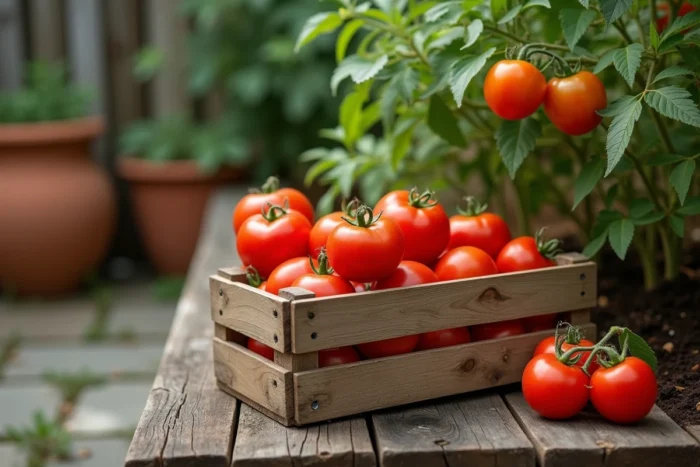
This reference changes the way to manage harvest timing. Instead of monitoring each fruit until it is fully red, you can pick at the breaker stage and free up energy for the next fruits on the cluster.
Finishing ripening indoors
A tomato picked at the partial coloring stage will finish ripening in 3 to 7 days at room temperature. A still green and firm fruit may take 1 to 3 weeks. Placing tomatoes in a crate with a banana (source of ethylene) speeds up the process.
This technique is particularly useful at the end of the season when the nights cool down and ripening on the plant slows significantly. We harvest everything that has started to change color and finish ripening in the kitchen.
Factors that lengthen or shorten the time for growing tomatoes
The variety does not explain everything. Several soil parameters modify the actual duration between flowering and harvest.
- Sunlight: a plant that receives less than six hours of direct sunlight per day will consistently take longer to produce ripe fruits.
- Irregular watering: alternations of drought and excess water stress the plant and slow ripening, in addition to causing fruit splitting.
- Pruning and leaf removal: removing suckers and clearing lower leaves improves air circulation and concentrates the plant’s energy on existing fruits, which can shorten harvest time by a few days.
- Soil and fertilization: a potassium-rich soil promotes fruiting, while an excess of nitrogen pushes foliage at the expense of fruits.
Feedback on this point varies by region and microclimates, but exposure remains the most determining factor after variety choice.
The complete cycle of a tomato plant, from sowing to the first harvest, spans several months. Rather than counting the days, observing the color of the fruit remains the best field indicator. Picking at the breaker stage, finishing ripening indoors, and adapting your varieties to your climatic zone: three concrete levers to avoid waiting indefinitely in front of green clusters.