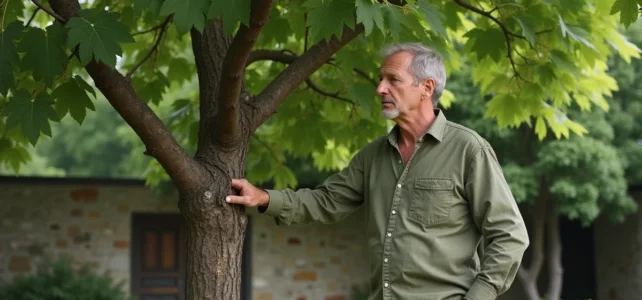
A plane mulberry (Morus kagayamae, sometimes labeled Morus bombycis) that has been planted for several years without producing a single berry presents a precise diagnosis. The problem rarely stems from a single factor: pollination, sterile variety, improper pruning, or root stress often combine.
Sterile variety or fruiting clone: sorting it out at purchase
The majority of plane mulberries sold in garden centers are cultivars selected for their ornamental foliage and spreading habit, not for their fruiting. The most common clone in France, marketed under the name Morus kagayamae ‘Fruitless’, is genetically sterile. No cultural intervention will make it fruit.
Read also : The best zero-calorie foods for a healthy and balanced diet
We regularly observe this confusion among gardeners who expect berries from a tree incapable of producing them. Before any further investigation, checking the original label or contacting the nursery remains the first reflex. If the mention “sterile” or “fruitless” appears, the diagnosis is closed.
For those wondering why my plane mulberry does not produce fruit, the answer often lies in this varietal distinction that few sellers clearly explain at the time of planting.
See also : How to Navigate Effectively with a Clear and Structured Sitemap
Fruiting cultivars of Morus do exist: Morus alba, Morus nigra, certain selections of Morus platanifolia. They produce abundant berries provided that pollination and growing conditions are met.

Pollination of the plane mulberry: a mechanism often misunderstood
The mulberry is a monoecious or dioecious species depending on the cultivars. Some individuals bear male and female flowers on the same tree, while others do not. A purely male specimen will never bear fruit.
In monoecious fruiting varieties, pollination is anemophilous (by wind). It occurs in spring over a short window. A prolonged episode of rain or late frost during flowering is enough to compromise the entire annual harvest.
Absence of cross-pollinator
Even in self-fertile varieties, the presence of a second mulberry nearby significantly improves the fruit set rate. An isolated tree in an urban garden without another Morus within an accessible pollen range will produce less, if at all.
We recommend checking if other mulberries exist in the vicinity. If not, planting a second compatible specimen remains the most reliable solution to restart fruiting.
Pruning the plane mulberry and its impact on fruiting
A severe pruning every winter removes the fruiting wood. The plane mulberry fruits on the wood from the previous year. Systematically cutting back one-year-old branches means eliminating future berries before they appear.
This scenario is common because the plane mulberry, grown for its dense shade, is subjected to “cat head” pruning aimed at containing its spread. This practice, consistent for ornamental use, is incompatible with fruit production.
Adapting pruning to encourage berries
- Retain some one-year-old branches, only cutting back the most vigorous or poorly oriented ones
- Prune after the summer harvest rather than in winter, to allow the fruiting wood to develop in the following spring
- Remove dead wood and crossing branches without touching the short lateral shoots, which bear the floral buds
The balance to be found depends on the available space. A plane mulberry left in a semi-free form will occupy more space, but the production of berries will be transformed.
Soil, watering, and root stress: the underground causes
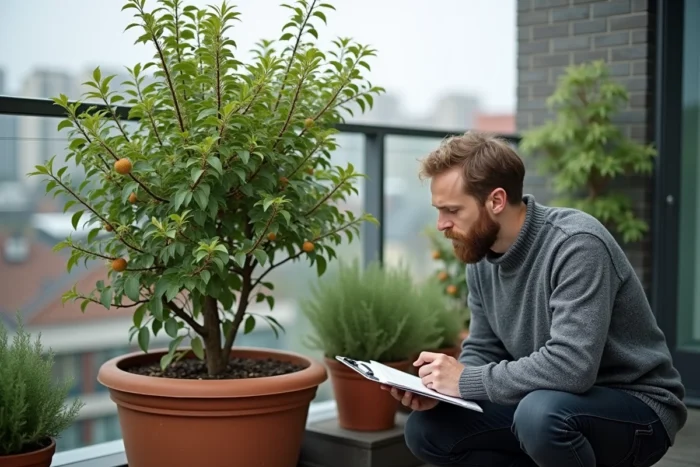
A plane mulberry planted in compacted soil, waterlogged in winter or deficient in potassium will prioritize its survival at the expense of fruiting. Chronic water stress causes young fruits to drop before maturation.
The Morus tolerates poor and calcareous soils, but fruit production requires a minimum of fertility. Soil that is too rich in nitrogen poses the opposite problem: the tree develops lush foliage at the expense of reproductive organs. The leaves are beautiful, the berries absent.
Corrections to be made to the soil
- Add a potassium amendment at the end of winter to stimulate flowering and fruit set
- Reduce or eliminate nitrogen inputs around the mulberry, especially if the surrounding lawn receives regular fertilizer
- Mulch at the base to maintain consistent moisture in summer without excess, using organic mulch that decomposes slowly
- Check drainage if the soil remains waterlogged for more than a few days after rain
A plane mulberry whose roots are competing with a dense hedge or another large tree will also lack resources to fruit. Spacing with neighboring plants directly conditions access to nutrients.
Youth of the tree: a factor of patience
A fruiting plane mulberry often takes several years after planting before producing its first berries. Waiting three to five growing seasons is normal for a specimen planted in a container.
During this establishment phase, the tree concentrates its energy on root and framework development. Forcing fruiting through treatments or specific pruning does not speed up the process and may even delay it.
The best indicator remains the appearance of catkins (pendulous inflorescences) in spring. Their presence confirms that the tree is entering the reproductive phase. Their absence after five years of planting on a supposedly fruiting cultivar points to a varietal or environmental issue to investigate.
A plane mulberry correctly identified as a fruiting variety, planted in well-drained soil, pruned judiciously, and pollinated by wind or a neighboring specimen will eventually produce. Most failures we observe in garden maintenance stem from a poor initial varietal choice or overly aggressive pruning, two correctable parameters.