
Microsoft has yet to confirm the existence of Windows 12. Despite rumors circulating since the Build 2023 conference, where a slide mentioned the “next-gen of Windows,” no official announcement has set a timeline. This ambiguity fuels speculation, but several technical clues help us understand what the publisher is really preparing.
NPU and PC Copilot+: the real hardware filter for Windows 12
Have you seen the mention of “PC Copilot+” on some recent computers? This label designates machines equipped with a component called NPU (Neural Processing Unit). It is a chip specialized in calculations related to artificial intelligence, distinct from the traditional processor and graphics card.
Further reading : The best zero-calorie foods for a healthy and balanced diet
According to several sources, Microsoft is initially testing the new features of its future system on these PC Copilot+ devices and its own Surface devices before expanding the rollout. This gradual deployment is not trivial. It means that a recent PC without an NPU could install the next version of Windows without accessing all its features.
This hardware filtering goes much further than the requirements of Windows 11, which had already excluded many machines due to the TPM 2.0 module. With Windows 12, the dividing line would no longer be between “compatible” and “incompatible,” but between a fully functional PC and a PC limited in AI functions.
See also : Discover the most beautiful destinations for unforgettable trips around the world
To keep up with the evolution of this information, you can check the release date of Windows 12 on Geekfinity, which compiles leaks and announcements as they come.
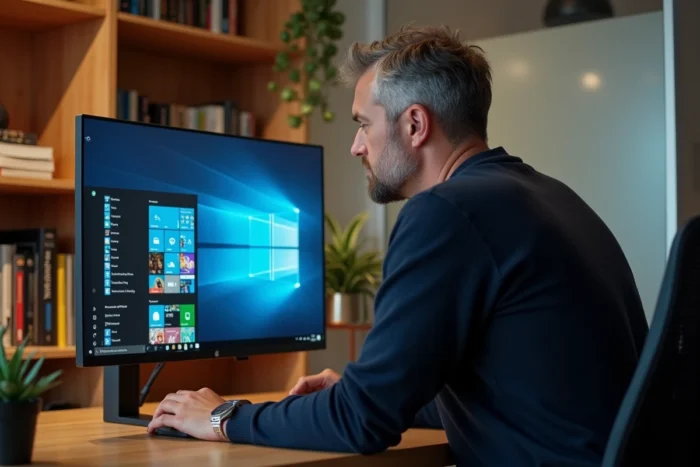
Copilot integrated into the Windows operating system
The Copilot assistant already exists in Windows 11, but as a sidebar added afterward. The expected change with the next version is its direct integration into the operating system. Copilot would no longer be an application layered over Windows, but a native component capable of interacting with files, settings, and other software.
Why does this change matter? Let’s take a concrete example. Today, if you are looking for a document modified last week, you use the file explorer and its filters. With a native Copilot, you could simply describe what you are looking for in plain language. The assistant would access the system’s index directly without going through a separate interface.
Microsoft talks about an “agentic” system, a technical term that refers to an assistant capable of performing tasks, not just answering questions. Summarizing a PDF, adjusting a network setting, launching a series of actions, all without manually opening each tool. This ambition assumes that the AI has deep permissions within the system, raising questions about the privacy of data processed locally.
Subscription or free upgrade for Windows 12
The question of price is rarely addressed in detail, yet it could change how users perceive this new version. Two scenarios coexist in the available sources.
- The first scenario follows the model of Windows 11: a free upgrade for users of the previous version, provided that the hardware is compatible.
- The second scenario discusses monetizing AI functions through subscription. Basic features would remain accessible, but advanced capabilities of Copilot (long summaries, complex automations, processing large documents) might require a monthly subscription, potentially linked to Microsoft 365.
- A third hybrid model would combine both: a free system, but premium functions charged per use or via a subscription.
This debate changes the very nature of the subject. Windows 12 would not just be a technical update, but a possible change in the economic model for the most widely used operating system in the world.
Release date of Windows 12: what reliable sources say
Analysts initially mentioned a release between late 2025 and early 2026. Microsoft has since announced version 25H2 of Windows 11, built on the same codebase as 24H2. This choice effectively postpones any new major version.
Several elements help to situate the likely timeline:
- Microsoft has confirmed that Windows 11 25H2 will be the next version of the system. No mention of Windows 12 in this roadmap.
- The most credible sources converge on the idea that no launch of Windows 12 is planned for 2026.
- The end of support for Windows 10 (initially scheduled for October 2025, with free security updates extension) suggests that Microsoft wants to first migrate as many users as possible to Windows 11.
The name “Windows 12” itself remains uncertain. Microsoft might opt for a gradual overhaul of Windows 11, with semi-annual updates incorporating the planned new features, rather than launching a system with a new number.
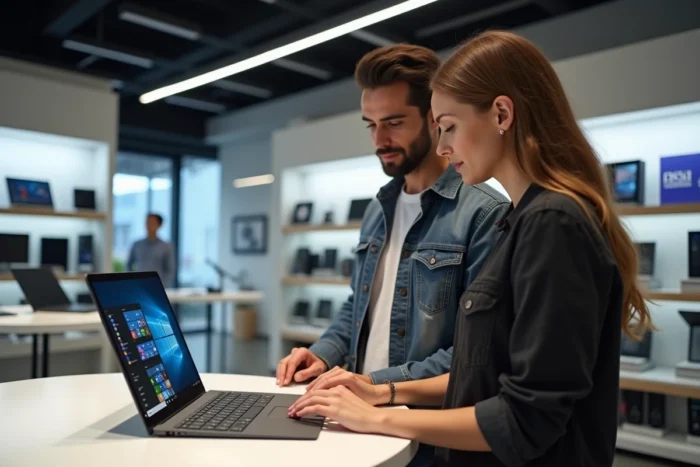
Redesigned interface: floating taskbar and widgets
Leaks suggest a modernized interface with a floating taskbar, detached from the bottom edge of the screen. This design choice resembles what some Linux distributions and macOS already offer. Widgets would become customizable and more integrated into the desktop, instead of occupying a separate panel as in Windows 11.
The system architecture would also be rethought. The “Core PC” project describes a modular system that adapts to the hardware of each machine. A lightweight PC would only install the necessary components, reducing disk space usage and improving startup performance. For gamers, improvements related to DirectX and reduced latency are mentioned in several sources.
These interface changes remain at the stage of leaks and internal prototypes. As long as Microsoft has not officially presented the next generation of Windows, every visual detail may evolve or disappear. The only verifiable fact to date: Microsoft’s priority remains Windows 11, and any projection about Windows 12 is still informed speculation.