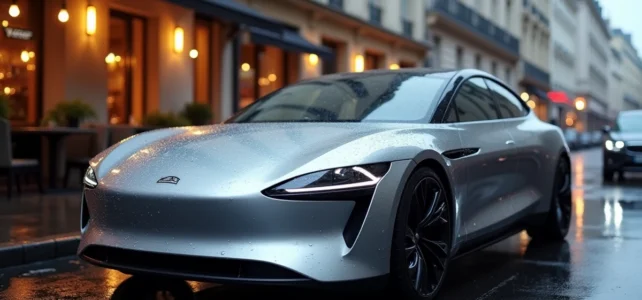
On the ground, in dealerships as well as on French roads, 2024 has reshuffled the cards. Between electric models struggling to convince beyond early adopters and diesel in free fall in real traffic, we witnessed a pivotal year where the gaps between segments widened without drawing a uniform trajectory. Here’s what has really changed in the automotive world in 2024.
Diesel traffic declining: kilometers traveled in 2024
New registrations tell only part of the story. What happens on the road gives a clearer signal. In 2024, the circulation of diesel cars (including diesel hybrids) fell by 4.7% in France, while that of petrol, gas, or electric vehicles increased by 7.6%.
You may also like : The best strategies to succeed in your digital marketing in 2024
Overall road traffic barely moved, with an increase of 0.2%. We are not driving more; we are driving with different engines. Diesel is losing ground on the road, not just in dealerships. Company fleets, subject to tax constraints and CSR policies, are accelerating this movement.
To follow these developments over the months, regular updates can be found on actu-auto-buzz.fr, which compiles news from the French market with a ground-level perspective.
Related reading : The latest trends and news not to miss for young people in 2024
Electric vehicles in France: a market that is stabilizing

In dealerships, the observation is direct. The market share of electric and plug-in hybrid cars slightly declined in 2024: 25.7% of registrations, compared to 26.2% the previous year (source: SDES, Ministry of Ecological Transition).
The purchase price remains the primary obstacle for the majority of buyers. Even with ecological bonuses, the gap with an equivalent thermal model weighs heavily on the best-selling segments, with city cars and compact SUVs at the forefront. Feedback also varies on the reliability of charging stations in rural areas, where the network is progressing but remains uneven.
An interesting signal comes from an unexpected niche: electric vehicles without a license have quickly overtaken their thermal equivalents. Limited range is not an issue for this type of use, and the daily cost remains low. Electric vehicles are convincing primarily where usage constraints are low.
2024 hybrid models: the pragmatic choice of French buyers
When hesitating between thermal and electric, hybrids emerge as the intermediate solution. In 2024, hybrids (light, classic, and plug-in) consolidated their position in almost all ranges at Renault, Peugeot, or Toyota, from small urban SUVs to family estates.
On the ground, the reasons for this success are concrete:
- No modification of domestic infrastructure, no search for a charging station. Daily life in suburban or rural areas remains unchanged
- A purchase cost situated between pure thermal and electric, with real consumption decreasing on mixed journeys
- A resale value that holds better than that of pure thermals in the used market, where demand remains strong
Hybrids remain the default choice for buyers who hesitate to switch to fully electric. Renault has expanded its E-Tech range, and several brands have postponed the total abandonment of thermal engines beyond 2030.
Connected cars and driving aids: what’s changing on board in 2024
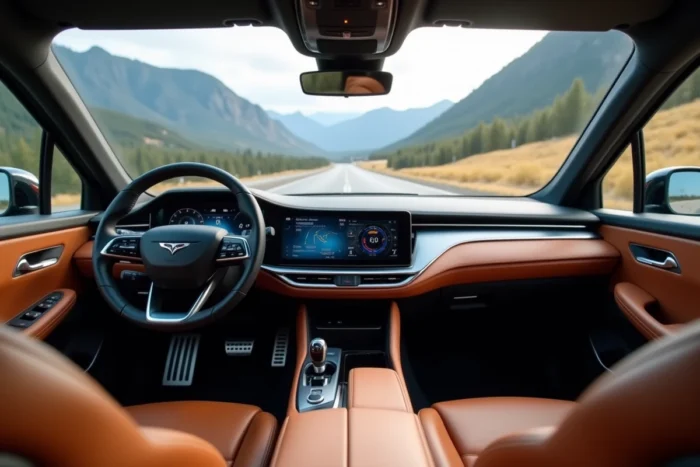
Level 2 driving assistance systems (lane keeping, emergency braking, adaptive cruise control) are now found even in entry-level models. It is no longer a premium argument; it is expected equipment by default.
The real turning point of 2024 concerns embedded connectivity. Over-the-air (OTA) software updates are being rolled out by an increasing number of manufacturers, including European ones. We receive fixes or new functions without going to the workshop. However, field feedback shows disparities: it depends on the installation, with some manufacturers pushing smooth updates, while others cause unsettling system restarts.
- Smartphone integration (Android Auto, wireless Apple CarPlay) weighs as much in the purchasing decision as the engine type for some buyers
- Touchscreens larger than 10 inches are gradually replacing physical controls, with an ongoing debate about ergonomics and safety
- The collection of driving data by manufacturers raises privacy questions that few buyers consider at the time of signing
The connected car of 2024 is not autonomous, but it accumulates data at a pace that the European regulatory framework struggles to keep up with.
Used car market 2024: a segment under pressure
The pressure on new car prices, due to raw material inflation and battery costs, has mechanically strengthened the appeal of used cars in 2024. Recent vehicles aged two to four years are trading at high levels, driven by a limited supply linked to production delays from previous years.
A concrete point of vigilance in this segment: buying a used electric vehicle requires checking the residual battery capacity. Without a battery health certificate (SOH), you are buying blindly on the most expensive component of the vehicle. Some brands provide this diagnosis, others do not. Checking this point before any transaction remains the most cost-effective precaution.
The market for youngtimers and collector vehicles continues to expand, driven by a generation of buyers attached to models from the 1990s-2000s. These vehicles escape the constraints of low emission zones (ZFE), adding a practical argument to the emotional appeal.
Diesel is declining on the road, electric is stabilizing, and hybrid is capturing the undecided. Buyers’ choices in 2025 will depend on energy prices, the network of charging stations, and European regulatory timelines.